
Septic System Cost Texas: Rural Land Buyer Guide
Updated: Sep 15
Buying rural land in Texas often comes with the hidden challenge of managing wastewater on your own. Most families spend between $6,300 and $20,000 to install a new septic system on their property. This investment depends heavily on your local soil and the county rules you must follow.
The average septic system cost Texas landowners pay typically ranges from $6,300 to $20,000 depending on the specific system type and the local soil conditions on your land. Conventional gravity systems are often the most affordable at $6,300 to $10,000, while aerobic systems for poor-draining clay or rocky ground can cost $10,000 to $20,000. Beyond the physical tank and labor, you must budget $1,500 to $5,000 for soil tests, design plans, and the professional permits required by your local county. The Environmental Protection Agency notes that local authorities must permit and inspect these systems to ensure they meet all health codes and protect the environment. This early planning helps you avoid stressful financial surprises while preparing your rural lot for a new Texas home.
Many buyers feel overwhelmed by these numbers and technical terms. Understanding how your location and soil type drive the price is the first step.
Septic System Cost Texas: What does a septic system cost in Texas?
Buying rural land in Texas is a big step toward building your dream home. But you must plan for the costs that come with it. In Texas, a new septic system usually costs between $6,300 and $20,000. This price range is wide because every property is different. Things like your soil type, where you live, and the type of system you need will change the final bill.
Most rural homes in Texas rely on these systems. According to the EPA, more than one in five U.S. households use a septic system for wastewater. Across Texas, septic systems are common on rural properties. Knowing these costs early helps you set a good budget for installing a septic system on your new lot.
Types of systems and what they cost
The type of system you set up is the biggest part of your bill. A conventional system is the most common and least costly option. These systems use gravity and soil to treat waste. In Texas, a conventional setup often costs between $6,300 and $10,000. This price includes the tank, the drain field, and the work to put it in the ground.
If your land has poor soil, you might need an aerobic system. These units use oxygen and power to treat waste more quickly. They are more complex and cost more to buy and run. You can expect to pay between $10,000 and $20,000 for an aerobic system in Texas. While the price is higher, these systems are often needed for certain parts of the state.
Permits and site prep fees
The price of the gear is only one part of the project. You also need to plan for site prep and legal fees. Before you dig, you must get a permit. In Texas, septic permit fees can range from $30 to $710. This depends on which county you are in. You must get this permit from your local health office or the state before you start any work.
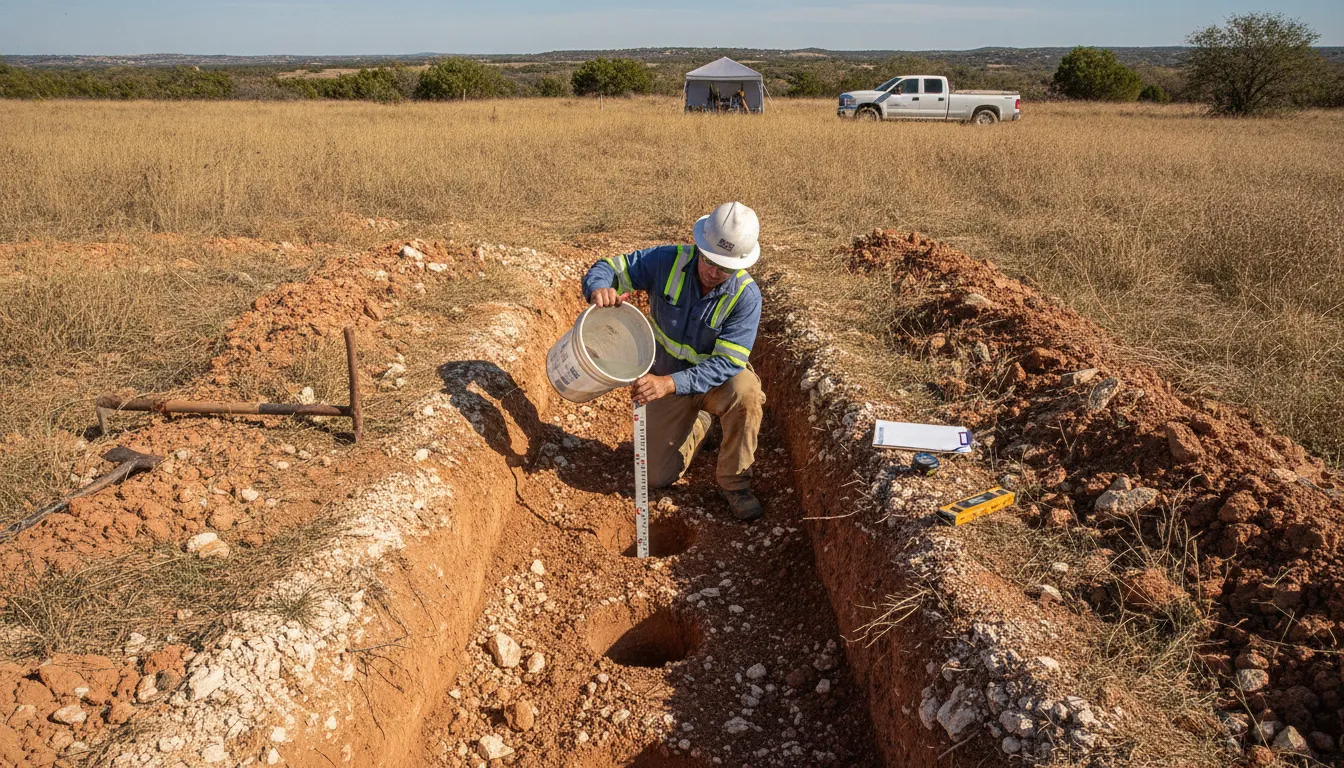
You should also set aside $1,500 to $5,000 for site testing and design. A pro will need to visit your land to check the soil and map out the system. They will perform a soil test to ensure it can support a septic system before they finish the design. These steps make sure your system works safely and follows the law.
Why Texas soil changes the price
Where you buy land in Texas plays a huge role in what you pay. For example, Central Texas and the Hill Country often cost 15% to 20% more than other areas. This is because the ground there is full of rock and heavy clay. If your lot is rocky, you may need to pay an extra $2,000 to $5,000 for rock trenching to bury your tank and lines.
The Blackland Prairie, which runs from Dallas down to San Antonio, has thick clay soil. This type of soil does not drain well. Because of this, many owners in this region must use aerobic systems, which adds $4,000 to $10,000 to the total cost. When you are planning for septic system costs, always check the local soil conditions first. It is one of the most key steps in your cost estimates for installing utilities on rural acreage.
In many rural areas, you will need both a septic system and a private water well. The EPA notes that people with septic systems often do not have city water. This means your site layout must keep the two systems far enough apart to stay safe. Taking the time to plan your site well now will save you from big headaches and high costs later on.
Which septic system is right for rural Texas land?
Quick answer: Conventional systems usually cost less and work best where deep, well-draining soil is available. Aerobic systems cost more and need ongoing maintenance, but they can work on clay-heavy, rocky, or space-limited sites when local authorities approve the design.
About one in five homes across the country use a private setup to handle waste. In the Lone Star State, more than two million septic systems help treat waste for rural families. The average septic system cost Texas land buyers see is between $6,300 and $20,000. Price depends on if you need a simple gravity setup or a complex power-run unit. Soil type and lot size also play a big role in your choice.
How gravity systems work
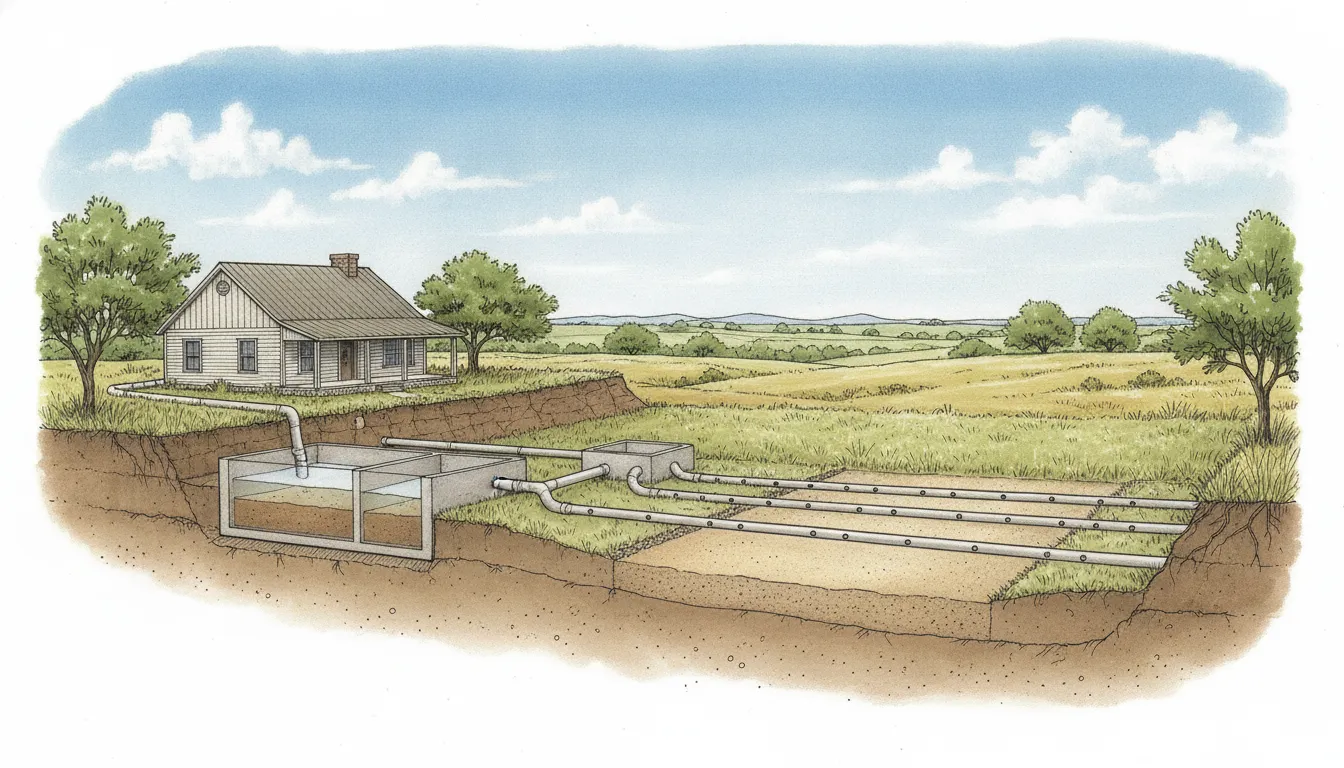
A standard setup is often called a gravity or conventional system. It uses a concrete or plastic tank to catch waste from your home. Inside the tank, solids sink to the bottom while liquids flow out to a drain field. This field uses stone-filled pits or lines to filter the water through the ground. These systems work best in deep sand or soil that lets water soak in well. Soil that drains well is a must for this type of system.
Because gravity systems do not need pumps or fans, they are often the cheapest choice to set up and keep running. There are fewer parts to break, which keeps your repair bills low over time. You might choose this if you buy land for a mobile home on a large, well-draining lot. But you must first pass a soil test to prove the ground can handle the liquid flow.
When you need an aerobic setup
In many parts of Central Texas, the ground is full of hard clay or limestone. This stops water from soaking in as it should. An aerobic system fixes this by using a pump to add air to the waste tank. This helps tiny bugs break down waste much faster than a standard tank. It acts like a small-scale water plant right on your lot. This process makes the water clean enough to be used in other ways.
Once the water is treated, it is often sprayed onto the lawn through small heads. These spray heads look like common lawn sprinklers but are part of your waste setup. While these units cost more to buy, they are a great tool for small lots or poor soil. They allow you to build a home in rocky areas where a gravity system would fail. This makes them common in the Texas Hill Country.
Upkeep and ongoing costs
Each type has its own needs for long-term care. A gravity unit is simple and may only need a pump-out every few years. But an aerobic unit has more moving parts, like air pumps and spray heads. These parts need power to run every day. In Texas, the law says you must also have a care contract with an expert for an aerobic system. This expert checks the unit every few months to make sure it is safe.
Even with these extra steps, these units allow you to live on land that would not support a basic septic pit. Many buyers find that the higher cost is worth the chance to own a certain piece of rural land. When you look at land, always ask about the soil and what system you will need. You can view properties that offer the space you need for a safe septic setup. Planning for these costs early will help you stay on budget as you build your dream home.
Feature | Conventional System | Aerobic System |
Main Power | None (Gravity) | Power needed |
Best Soil | Deep sand or loam | Clay or rocky soil |
Waste Exit | Drain field pipes | Surface spray heads |
Care Needs | Low (Pump only) | High (Paid contract) |
Starting Cost | $6,300 - $10,000 | $10,000 - $20,000 |
How do soil and site conditions affect septic cost?
Quick answer: Soil drainage, depth to rock, slope, available space, and required setbacks determine whether a lower-cost conventional system is feasible or a more complex design is needed.
The land you buy sets the type of septic system you need. In Texas, the soil under your feet is the main factor in your final bill. Before you can get a permit, a pro must test your soil. This test looks at how fast water sinks into the ground. If your dirt is sandy and deep, you can likely use a standard gravity system. But many parts of Central Texas have heavy clay or hard rock. These factors make the job more complex.
How soil types change your system
Texas has many soil types. These types change your septic system cost Texas. In areas with deep, good soil, a standard system is often the best choice. These systems use a simple flow to move waste into a drain field. They are mostly the low-cost option for land owners. But you must first do a soil test to ensure it can support a septic system before you start.
Many rural areas between Dallas and San Antonio sit on heavy clay. This soil does not drain well. When the soil is tight, a standard system will not work. In these cases, you will likely need an aerobic system. These units use air and power to break down waste fast. They work well, but they can add $4,000 to $10,000 to your total price. They also need a monthly power bill and regular checks to keep the pump running.
Handling rock and steep slopes
The Hill Country is famous for its views. But the hard rock can be a challenge. If your land has rock near the top, you cannot dig a standard trench. You may need to pay for rock trenching or a special mound system. This extra work can add $2,000 to $5,000 to your cost. A site with a steep slope can also drive up the price. Systems work best on level ground. This helps solids settle in the tank the right way. If your land is not flat, you might need to move dirt or use a pump to push waste uphill.
Setbacks and your property layout
Your property must have enough space for the tank and the drain field. Local health codes set strict rules on where you can put these parts. For example, the tank must be a set distance from your home. You also cannot put a drain field near a water well or a creek. These rules are in place to protect your health and the water supply. Think about where you plan to build shops or pools. Once the system is in the ground, you cannot build on top of it or drive heavy trucks over it.
Most land owners find that site prep costs are not part of the land price. When you budget for your home, make sure to include $1,500 to $5,000 for site tests and plans. This ensures your system meets all state and local rules. You can find out more about how septic systems work and their impact on your site from the EPA. Knowing these facts early helps you avoid shocks when it is time to build your rural home.
What permits does a Texas septic system need?
Quick answer: A Texas septic installation requires approval before work begins, with the local authorized agent or TCEQ reviewing the site, design, setbacks, and completed installation. Exact requirements and fees vary by county and property.
Texas law requires you to get a permit before you start any septic work. The Texas Commission on Environmental Quality (TCEQ) oversees these rules to protect the land and water. You must get your permit from a local county office or a TCEQ agent. These groups ensure that your system is safe for the area and the people who live there.
Role of the TCEQ and local agents
Most rural land buyers work with a local health or environmental office. These agents review your plans and inspect the final build. They check that the soil can drain well and that the tank sits in the right spot. For case, they look for proper setback distances from your house and water well. Checking these details helps you avoid costly fixes or health risks later. It is a good idea to budget for installing a septic system as part of your land purchase plan.
Local agents also check that the system is the right size for your home. A 1,000 gallon tank is usually enough for a three bedroom house, but local agents set the rule for your site. They make sure the system can handle the waste from your daily use. This care keeps the local water supply clean and safe for everyone.
Costs and records for septic permits
The cost to get a permit in Texas varies by place. Most owners pay between $30 and $710 for these fees. But the permit is only one part of the total bill. You should also budget between $1,500 and $5,000 for the full site review. This cost covers the soil test to ensure it can support a septic system and the final design work.
If you buy land that already has a system, you should look for its records. You can contact your local health office to ask for the "as-built" drawings. These papers show exactly where the tank and lines are buried. Having these records makes it much easier to plan new builds or fixes. According to the EPA, these local offices are the best source for permit history and design data.
Verifying rules in your county
Every county in Texas can have its own rules for septic systems. What works in one area might not be allowed in the next. This is why you must check the latest rules with your local office. Do not guess about what you need. Talk to a pro who knows the soil and local codes in your area. Local pros can help you understand the total septic system cost Texas buyers face.
Before you build, get cost estimates for installing utilities from local experts. These pros can help you manage the local permit steps and soil testing. They will ensure your system meets all state and county standards. Taking these steps protects your money and ensures your rural home has a good way to treat waste. Always trust local pros and official agents for the most current data on Texas septic rules.
What septic due diligence should buyers complete?
Quick answer: Before buying acreage, confirm property restrictions, request existing septic records, hire qualified local professionals for site and soil evaluation. Verify county requirements, and collect written estimates for the likely system design.
Buying land in Texas is a big step toward building your home. But you must look beneath the surface before you sign a deal. In rural areas, you will likely need a private system to treat wastewater. A new septic system cost in Texas can range from $6,300 to $20,000 based on the system type and local soil. Doing your research early helps you avoid surprises that could stall your project or cost you extra money.
Understand your soil type
The ground on your property tells you what kind of system you can use. In many parts of Central Texas, the soil is full of heavy clay or rock. These soil types often mean you cannot use a simple gravity-based system. Instead, you might need an aerobic system that uses oxygen and power to treat water. This type of setup is common in the corridor between Dallas and San Antonio. It usually costs more to set up than a standard drain field.
Check for rules and records
Every county has its own set of rules for how you manage waste. Before you buy, you should contact the local health office. You can ask for a copy of septic records if the land already has a system. These drawings show where the tank and lines sit. If the land is empty, the county can tell you about specific setback rules. These rules say how far your tank must be from your home or your water well.
Follow these steps for due diligence
Taking an orderly approach will help you feel sure about your purchase. Use this list to guide your research before you close on the land.
- Review property restrictions.
Read the deed and any local rules to see what uses the land allows. Some areas have strict rules on where you can place a septic tank.
Perform a site test.
Hire an expert to conduct a
soil test to ensure it can support a septic system
. This test shows if the ground drains well enough for a standard system.
- Pick the right system type.
Work with a designer to pick between a standard or aerobic design. Your soil test results will usually tell you which one you need.
- Plan your total budget.
Factor in more than just the tank and labor. You should plan for $1,500 to $5,000 extra for site testing, design work, and permit fees.
- Get price quotes.
Ask at least two local teams for full price estimates. Make sure they include the cost of a tank access lid and any rock digging if the ground is hard.
- Contact local agents.
Speak with the county agent to learn about the permit process. In Texas, you must get a permit before you start any work.
Confirm that the intended homesite leaves room for required setbacks.
Verify current permit rules and fees with the local authorized agent.
Keep soil reports, designs, permits, inspections, and written estimates together.
Once your system is in the ground, you must keep it running well. Most systems need an expert to pump the tank every three to five years. This timing is based on how many people live in your home and how much water you use. Proper care prevents health risks and protects nature. While the initial cost of a system is a big step, regular care is simple and cheap.
Plan septic early when shopping for Texas acreage
Quick answer: Treat septic feasibility as part of the land purchase, not as a task to solve after closing. A site evaluation and realistic system allowance make it easier to compare properties and protect your building budget.
Buying land is a big step toward building your dream home. But many buyers forget the price and type of septic system they need. Since most rural land does not have city sewer, you must manage your own waste. Planning for these costs early helps you avoid big shocks later. At Eden Land Company, we want our buyers to feel sure as they plan for their future.
Understand the system type you need
The type of system you build is the biggest factor in your budget. In Texas, a new system often costs between $6,300 and $20,000. For land with good soil, a simple gravity system may work. These usually run from $6,300 to $10,000. However, many parts of the state need more complex setups.
Aerobic systems use air and power to treat water. They are common in areas with poor drainage and can cost $10,000 to $20,000. Knowing your options helps you find cost estimates for installing utilities before you close on a deal.
Soil conditions drive total costs
The ground beneath your feet plays a major role in the septic system cost Texas owners face. In the Hill Country, rocky limestone makes digging hard and adds to the price. In the Blackland Prairie from Dallas to San Antonio, clay soil is common. These conditions often mean you must use an aerobic system.
According to the EPA, over one in five U.S. homes use septic systems for waste. In Central Texas, expect to pay 15% to 20% more for work and parts than in flatter areas. It is wise to order a soil test to ensure it can support a septic system before you build. This test tells you exactly what kind of system the law needs for your plot of land.
Factor in design and permits
The price of the tank and pipes is only part of the story. You must also budget for site work and legal papers. State law says you must get a permit from the county or a state agent. These permits usually cost between $30 and $710 depending on where the land is.
You should also set aside $1,500 to $5,000 for site design and plans. A pro will need to map out your drain field. They will make sure it stays away from wells or house bases. Taking these steps early ensures your home is safe and follows all state rules for health.
Frequently Asked Questions
How often should I have my septic tank pumped in Texas?
Most septic systems in Texas need an expert pump-out every three to five years. This steady care keeps the system working well and prevents costly damage to your drain field. The exact timing depends on the size of your tank and how many people live in your home. The Texas Septic Guide says that failing to pump your tank can lead to health risks and costly repairs.
Do septic systems in Texas need extra additives to work?
You do not need to use extra products to keep your septic system working right. Small bugs in the tank already do the work of breaking down waste. Adding strong chemicals can sometimes harm the system or the ground around it. The EPA says that right care and steady pumping are the best ways to look after your system without using extra items.
How can I find the septic records for my Texas property?
You can find your septic records by calling your local county health office or the state. These offices keep the drawings that show where your tank and drain field sit. They also have copies of the first permits and check-up reports. The EPA says that having these papers is vital when you need to fix the system or sell your land.
What happens if a septic system fails on my Texas land?
A failing septic system can cause waste to back up into your home or create wet, smelly spots in your yard. These issues can harm your health and hurt the local land. Fixing a broken system can cost many thousands of dollars to repair or replace. The EPA says that steady check-ups and careful water use are the best ways to avoid these costly problems.
How can I tell if a rural Texas home has a septic system?
You can check for a septic system by looking at your land deed or water bills. If your sewer charge is zero dollars, you likely have a private system. You may also see a black or green plastic lid in your yard about ten feet from the house. The EPA says these lids provide a way to get into the tank for cleaning and care.
Explore Central Texas land with a practical plan
A septic estimate is one part of a responsible rural-land budget. Confirm the requirements for each property, compare written estimates, and leave room for your home, water source, access, and future plans.
Explore current Central Texas land listings and contact Eden Land Company when you are ready to discuss available acreage. Property restrictions, septic feasibility, utility options, financing terms, prices, and availability vary, so verify the details for the specific lot before purchasing.


Comments